Treat yourself to $500+ in MVJewels and enjoy FREE INTERNATIONAL SHIPPING.


Larimar with an Origin: Mónica Varela and the Certification That Protects a Dominican Legacy

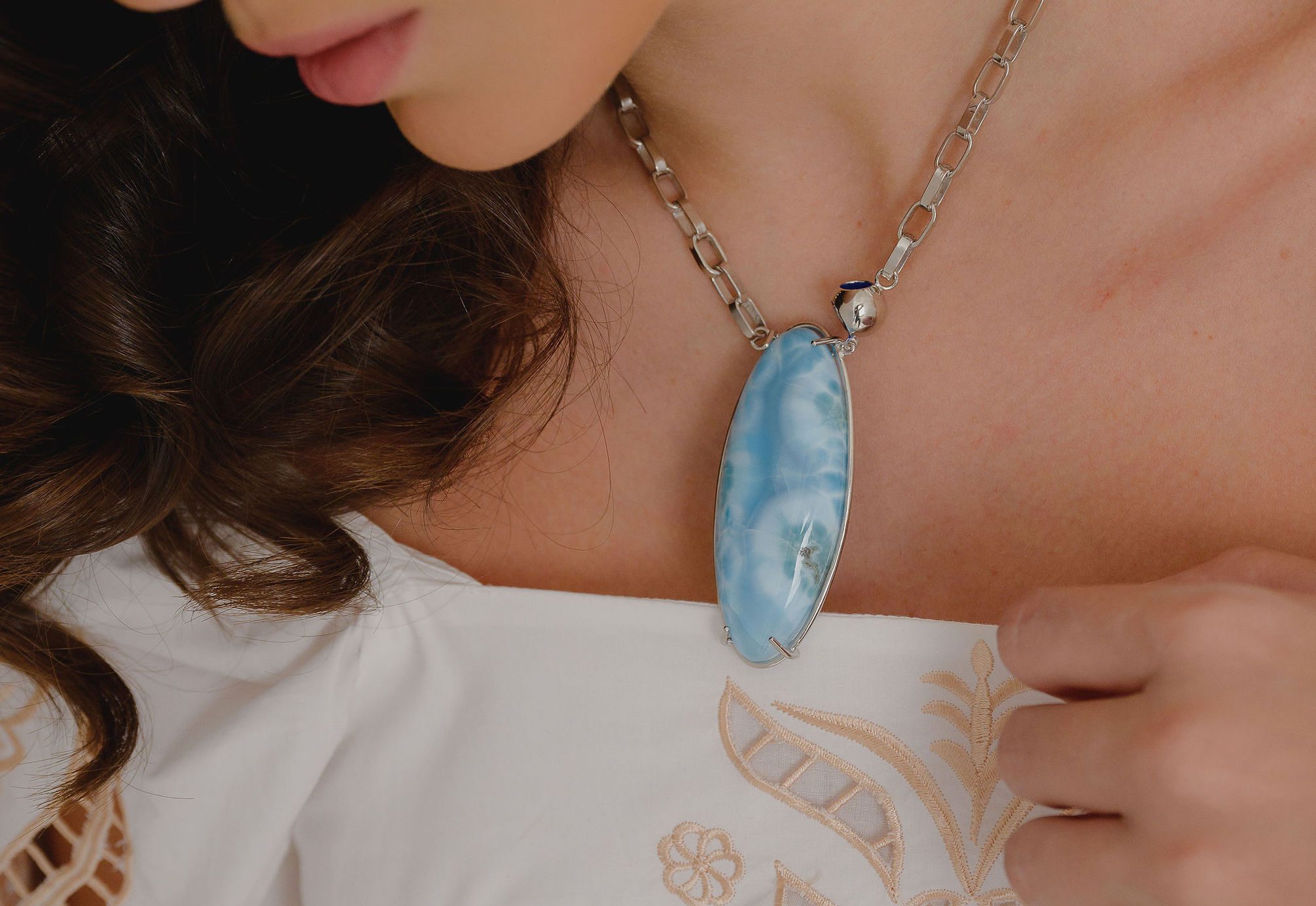
Some materials carry their origin visibly. Larimar is one of them. Its blue can evoke the Caribbean at first glance, but its identity goes far beyond color. Larimar Barahona comes from one specific place in the Dominican Republic, the Sierra de Bahoruco in the province of Barahona, and its geological origin, the communities connected to its extraction, and the craftsmanship that turns it into jewelry are all part of the same story.
That connection between material and place is exactly what a Denomination of Origin exists to protect. For Mónica Varela, that idea became personal in November 2025, when she became the first three-dimensional registered trademark brand to receive the certificate of origin for Larimar Barahona, an honor granted by the Consejo Regulador, the regulatory council led by the Ministry of Energy and Mines and ONAPI, during the celebration of National Larimar Day.
“This certificate not only recognizes the value of Larimar,” she said on receiving it, “but also the Dominican Republic, its identity, and its mineral legacy.” She also received a Medalla de Reconocimiento for her trajectory promoting Larimar locally and internationally. For a designer whose creative language is rooted in Dominican materials, the distinction represents more than recognition. It represents responsibility.
What Is the Larimar Barahona Denomination of Origin?
A Denomination of Origin is a form of intellectual property protection that ties a product’s name and identity to the specific place that produces it, and to the characteristics that place gives it. In the case of Larimar, the Dominican Republic established this protection for the distinctive blue pectolite found in the Sierra de Bahoruco, safeguarding the material’s authenticity and preventing the Larimar Barahona name from being used for stones that don’t meet the established requirements.
The designation was granted nationally in 2018. Its international protection followed through the Lisbon System of the World Intellectual Property Organization, extending the safeguard across the agreement’s member countries and identifying the Dominican Republic as the country of origin, with the Ministry of Energy and Mines as the designation’s holder.
That last detail matters for accuracy. The Denomination of Origin belongs to the protected identity of Larimar as a Dominican-origin product, held by the Ministry itself. Mónica’s certification represents her recognition and authorization within that protected system, not ownership of the designation. That distinction is precisely what makes the achievement meaningful: she has brought a formal system of origin, authenticity, and traceability directly into the world of contemporary Dominican jewelry design.

A Legacy Two Generations in the Making
Mónica’s certification connects to a longer story. Larimar’s modern history began in 1974, when Miguel Méndez rediscovered the stone and gave it its name, joining Larissa, his daughter, with mar, the Spanish word for sea. Méndez helped bring Larimar into the consciousness of Dominican craftsmanship. Decades later, Mónica is exploring how that same material can enter a contemporary international language of design, carrying his discovery forward rather than simply inheriting it.
That continuity is part of why this recognition landed the way it did within the brand. The certification wasn’t the start of a relationship with authenticity and traceability. It was the formal recognition of one that had already been shaping the brand for years, through close relationships with the local miners, lapidaries, and artisans connected to Larimar, from the mines of the Sierra de Bahoruco to the finished jewel.
Why Origin Matters for Larimar
Larimar cannot be separated from the land that creates it. It exists exclusively in the Dominican Republic, and its protected geographical identity recognizes that its characteristics are inseparable from where it comes from. That makes Larimar more than a gemstone used in jewelry. It is a natural resource, a cultural symbol, and, increasingly, an economic one: Dominican Larimar exports have grown substantially in recent years as global interest in the stone continues to rise.
A Denomination of Origin exists to protect all of that at once, the material’s authenticity, the value it generates for the miners and artisans connected to it, and its ability to carry a true story into the world rather than a generic one. Larimar’s value is no longer defined only by its beauty. It is increasingly defined by origin, authenticity, and the ability to trace a piece back to where it truly began.
From a Protected Stone to a Designed Jewel
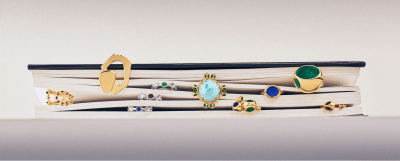
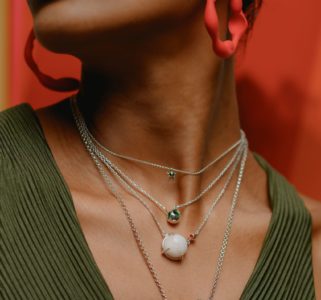
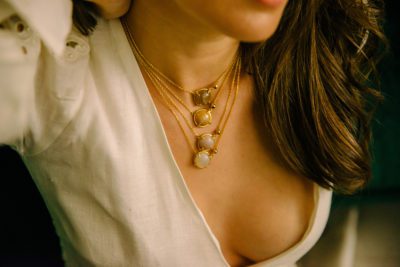
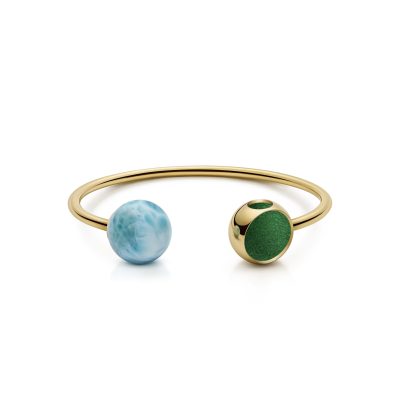
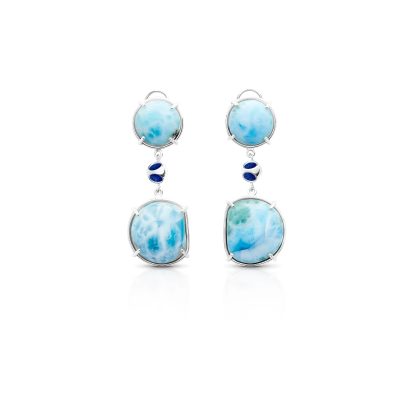
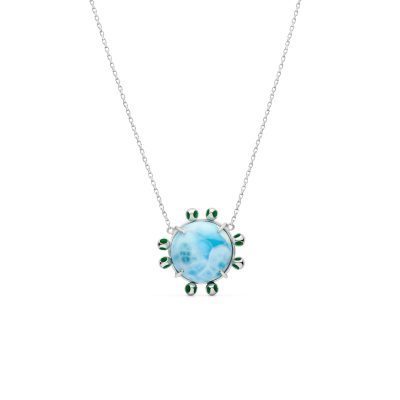
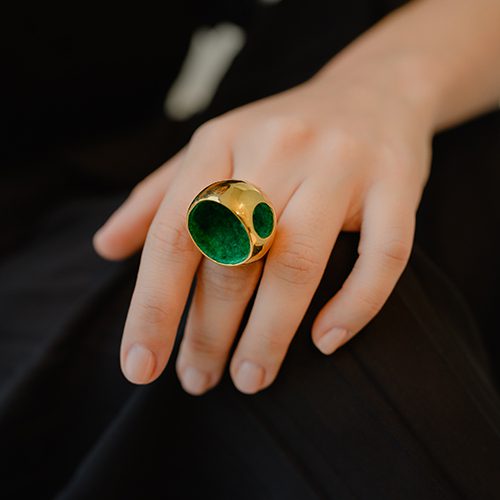
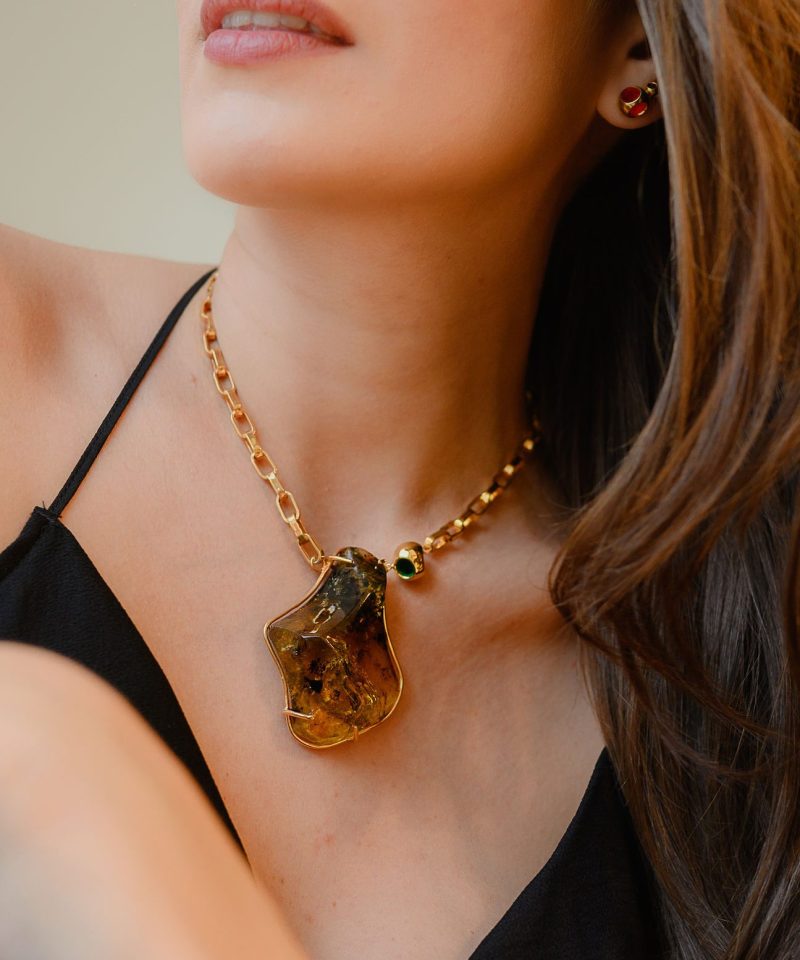
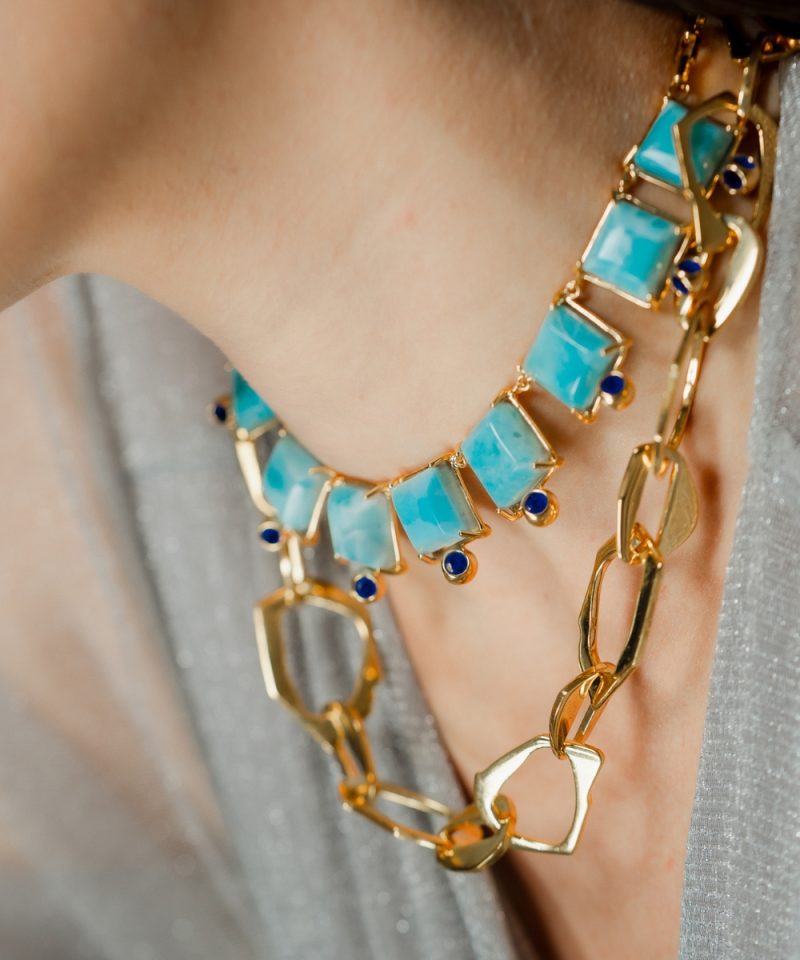
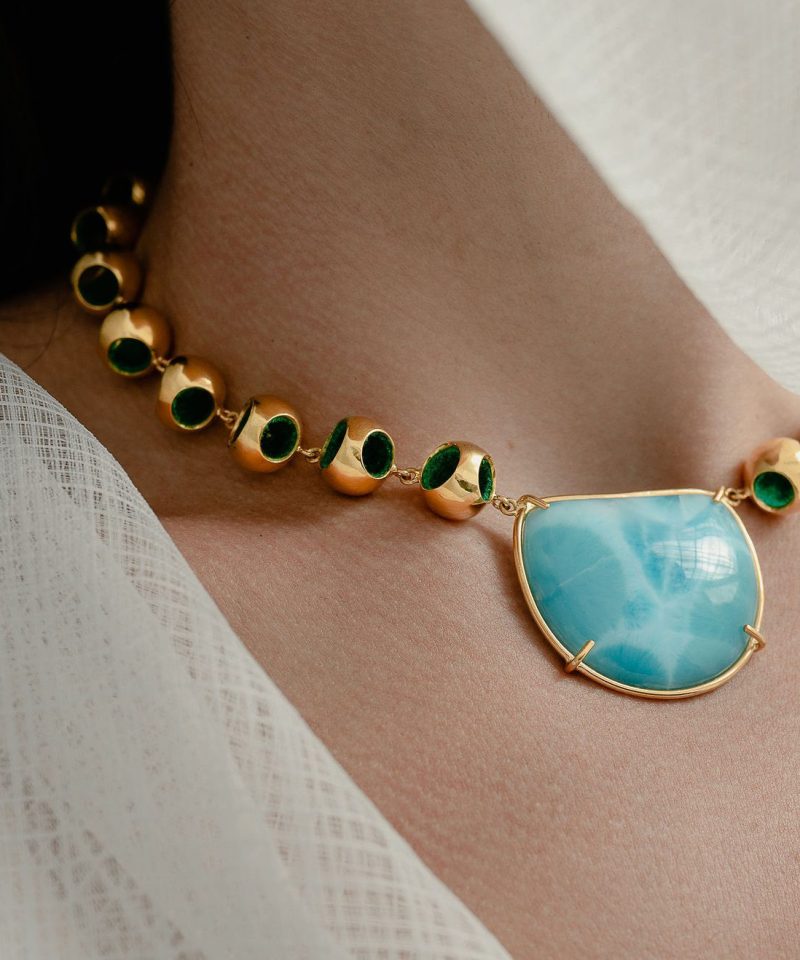
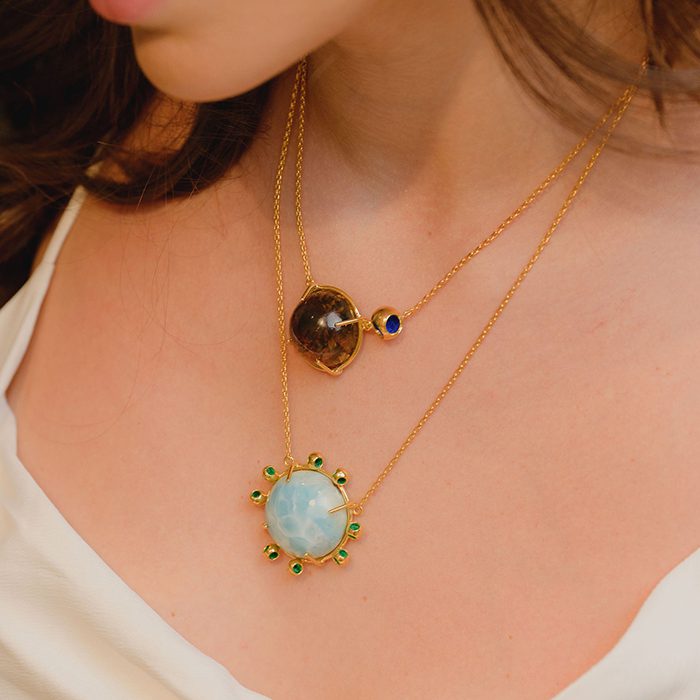
For Mónica, Larimar has never been simply a blue stone chosen for its color. It is one of the materials through which she expresses Dominican identity, and her work begins with the material itself: its natural variation, its movement, its individuality. Rather than treating Larimar as decoration, she builds contemporary forms around its character, a philosophy that runs through the larger Monica Varela universe, where Larimar appears alongside Dominican amber and moonstone within one recognizable design language.
The result is a different relationship between origin and luxury. A stone doesn’t need to lose its identity to become sophisticated. Its identity is what gives the design meaning, and provenance, increasingly, is part of what gives a piece its value in the first place. Today’s question is no longer only what stone this is. It is also where it came from, who transformed it, and whether that origin can be trusted. Larimar offers an unusually compelling answer to all three.
Carrying the Dominican Republic in a Jewel
For Mónica, Larimar represents a connection to home, a visual language of the Caribbean, and a responsibility to the people, knowledge, and heritage connected to it. The Certificate of Denomination of Origin marks an important moment in that ongoing story, but the story continues well beyond the certificate itself.
Every time Larimar is carefully selected, thoughtfully cut, and transformed into a contemporary jewel, the story of Barahona travels with it, from Dominican soil to international collections, from natural material to cultural expression. The origin remains in the stone. The design gives it a new language.