Treat yourself to $500+ in MVJewels and enjoy FREE INTERNATIONAL SHIPPING.


The mineral family that produces moonstone is among the most abundant on Earth. And yet, under the right geological conditions, it can become something worth holding.
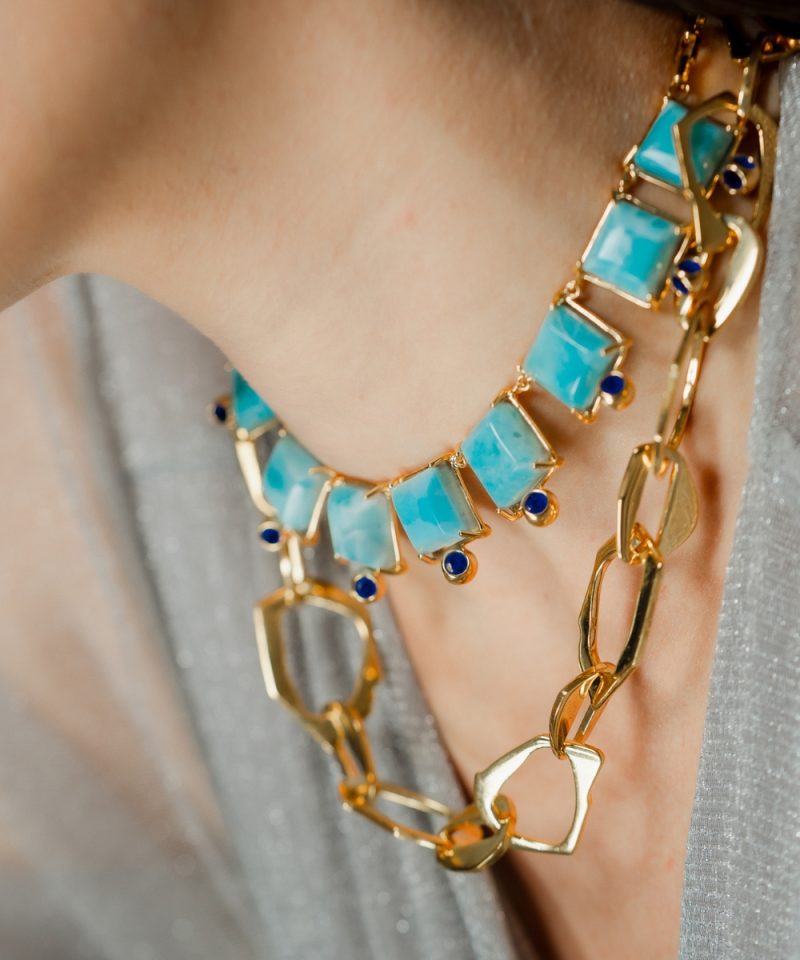
For Mónica Varela, whose mission is to elevate the natural treasures of the Dominican Republic through contemporary design, moonstone completes a trilogy. Larimar carries the island’s waters. Amber carries its ancient forests. Moonstone carries its earth: cool, smooth, and still. She works only with the Dominican variety.
What Is Moonstone?
Moonstone belongs to the feldspar family, the most abundant group of minerals in the Earth’s crust. What distinguishes moonstone is its internal architecture: microscopically thin, alternating layers that, in some varieties, produce a soft optical sheen known as adularescence.
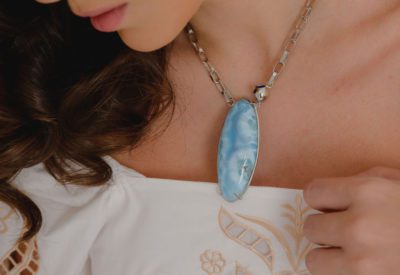
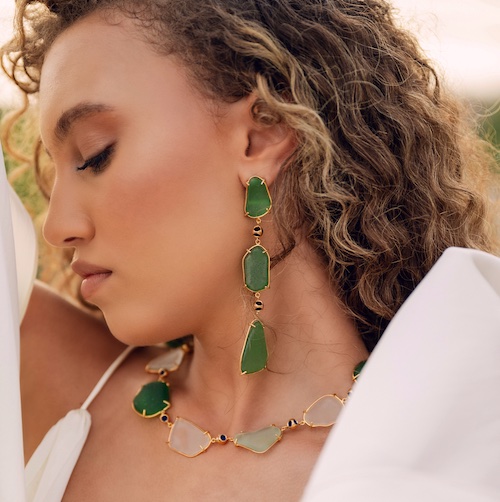
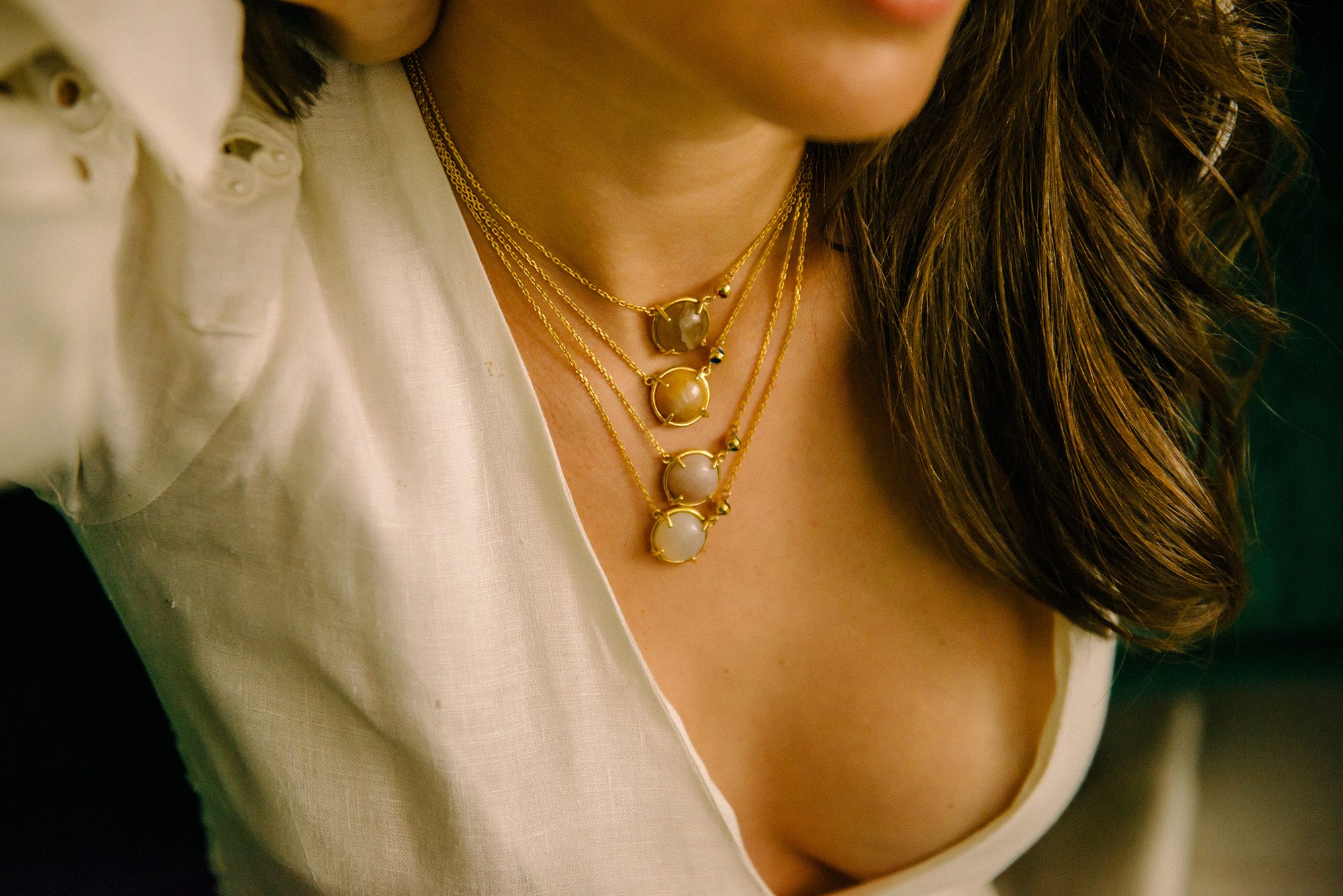
Moonstone appears in more than one form. The variety most often photographed is nearly transparent, with a pale blue shimmer floating across a glassy surface. But moonstone also exists as a body-color stone: white, gray, brown, pink, and warm salmon tones, ranging from translucent to fully opaque.
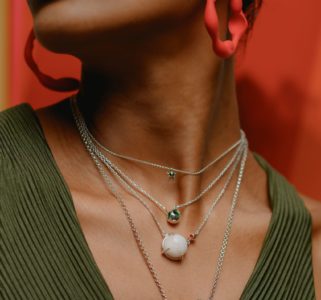
This is the moonstone Mónica Varela works with, and it asks to be experienced differently. It is a stone of surface and touch rather than flash. Smooth, cool against the skin, matte rather than mirror-like, it has the presence of a stone shaped by a river: worn soft by time, beautiful without asking for attention.
Like Larimar and amber, no two pieces are identical. One may be the gray of an overcast morning. Another may hold the pink of the inside of a shell, or the warm brown of wet sand.
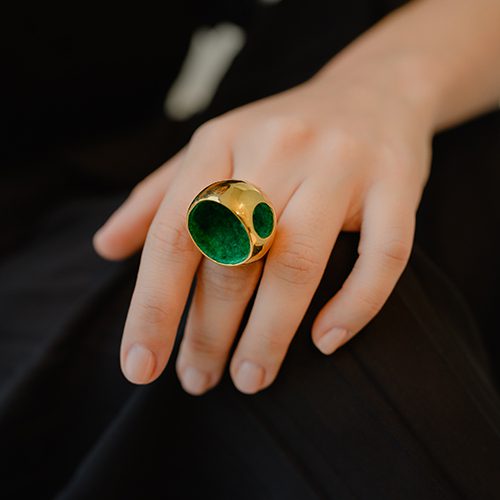
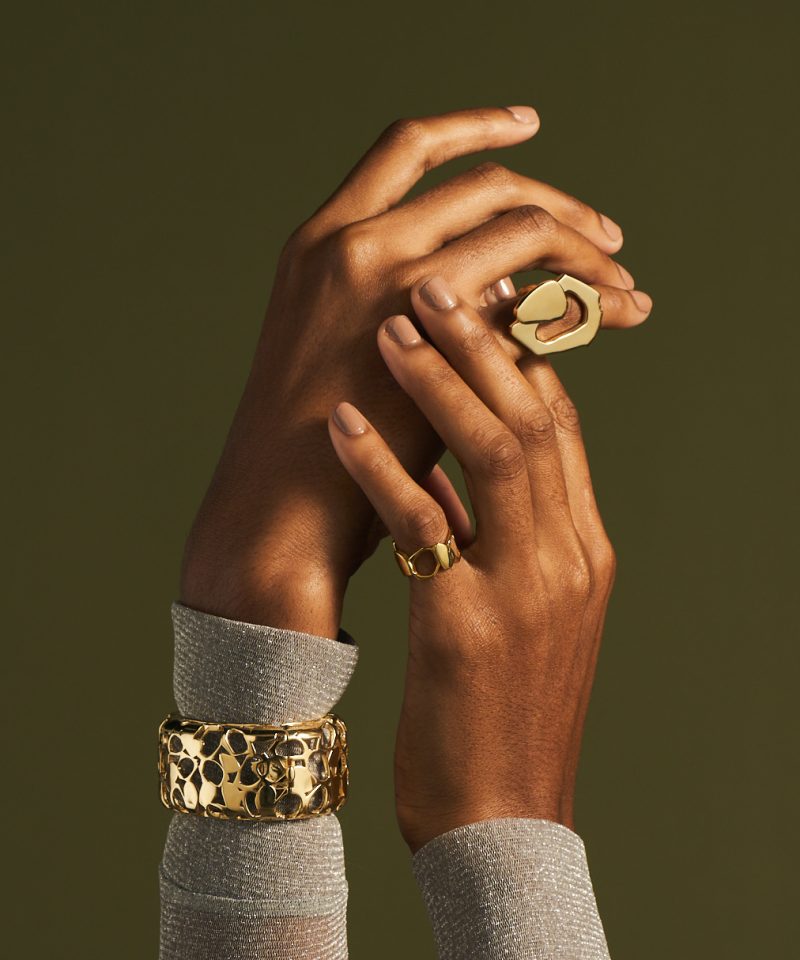
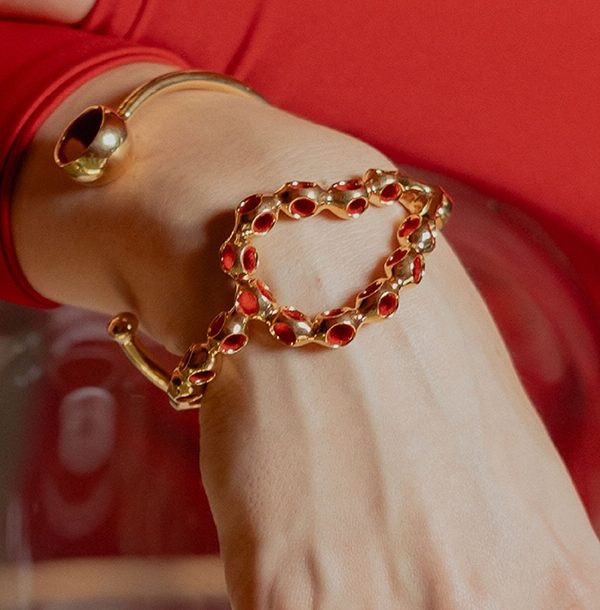
Mónica designs many of her moonstone pieces with the stone set against an open back, so it rests directly on skin rather than behind a plate of metal. The effect is deliberate. A stone this composed is meant to be felt, not just seen; its coolness settling against the body the way a hand settles once it stops reaching for something.

The Rarity Hidden Inside Abundance
There is something almost philosophical about moonstone. Its raw material is everywhere. The version worth treasuring is rare.
This is part of what draws Mónica Varela to the Dominican variety specifically. Feldspar may cover the planet, but stone with the character worth setting in jewelry appears only where geology cooperated, and the Dominican Republic is one of those places. Choosing Dominican moonstone, when the mineral family exists nearly everywhere on Earth, is a statement.
“Even in abundance, origin matters.”
It also completes an idea running through her work. The three stones at the heart of her universe, Larimar, amber, and moonstone, all come from the same small island. One country, three entirely different temperaments: the blue movement of its waters, the golden warmth of its ancient forests, and the stillness of its earth.
The Meaning Behind Moonstone
Moonstone deepens intuition. Within spiritual traditions, it is associated with restoring emotional balance and reconnecting you with your inner wisdom. These are symbolic associations rather than scientifically established effects, but for thousands of years, cultures across the world have linked the stone to the moon: to cycles, reflection, and a kind of knowing that arrives quietly rather than loudly.
Where amber pushes outward, toward vitality and confident expression, moonstone turns inward. Holding one feels less like admiring a jewel and more like picking up a smooth stone from a riverbed, an old, instinctive gesture that steadies you.
In the Monica Varela universe, each stone carries its own energy, and the wearer completes the story. Because the stone sits against skin rather than behind it, that energy is never abstract. It is close enough to feel, a small point of contact you return to without thinking, the way you might touch a ring when you need to remember something true.


One Design, Three Temperaments
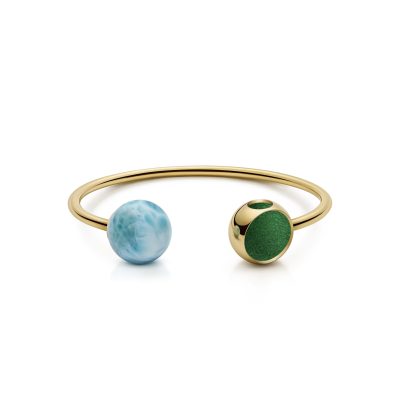
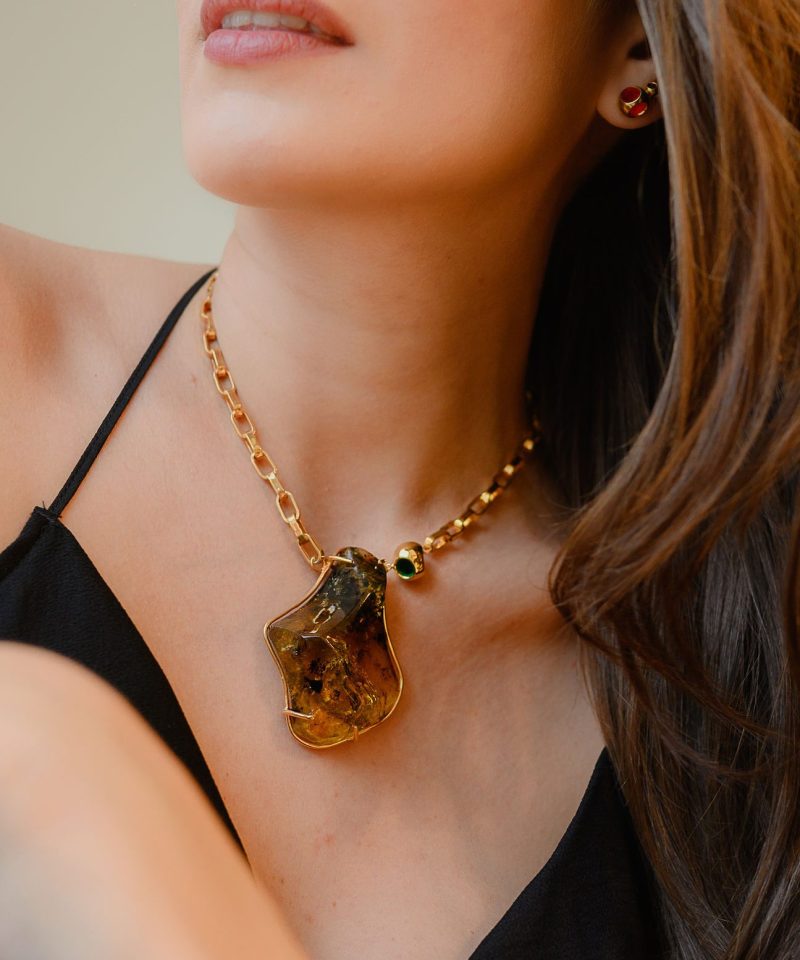
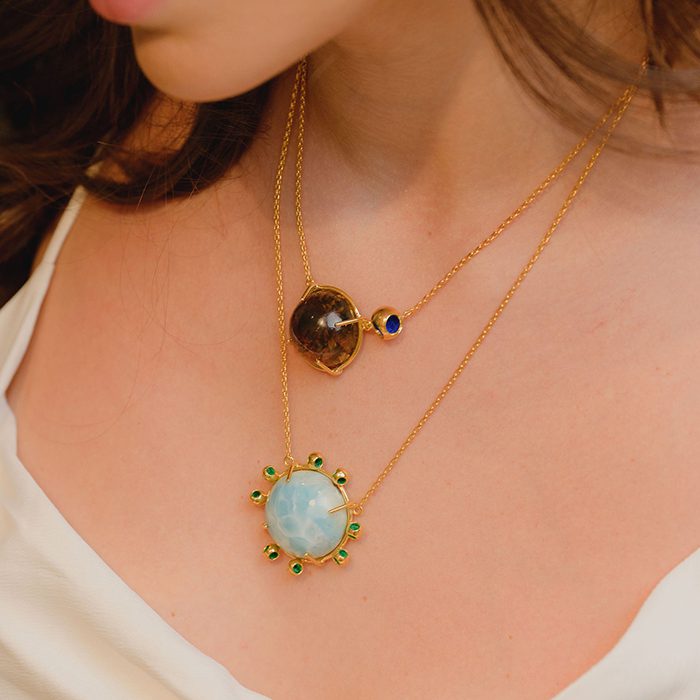
Moonstone takes its place in a design philosophy that runs through Mónica Varela’s work: most of her pieces exist across her three signature stones. The same sculptural form may live in Larimar, in Dominican amber, or in moonstone, and each material transforms the piece completely.
Larimar cools a design. Amber ignites it. Moonstone grounds it.
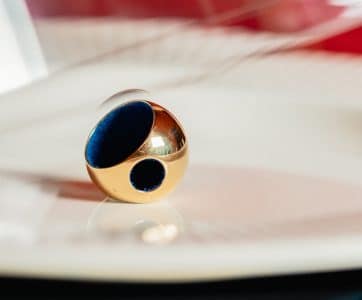
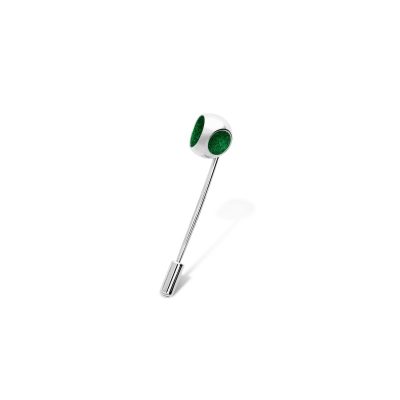
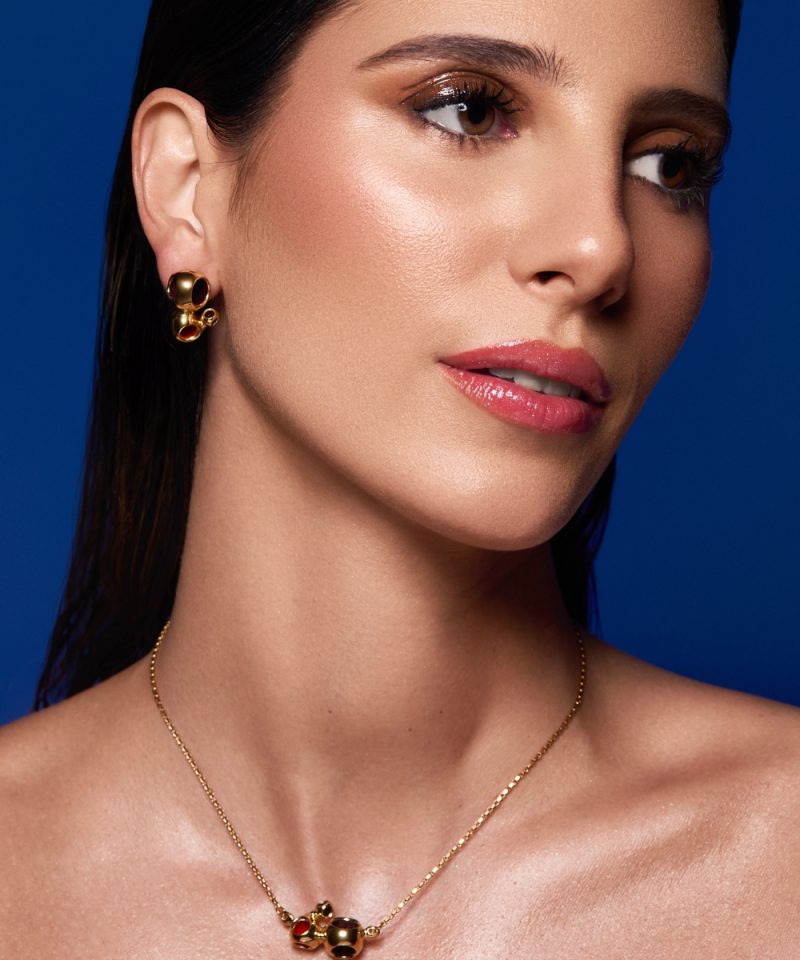
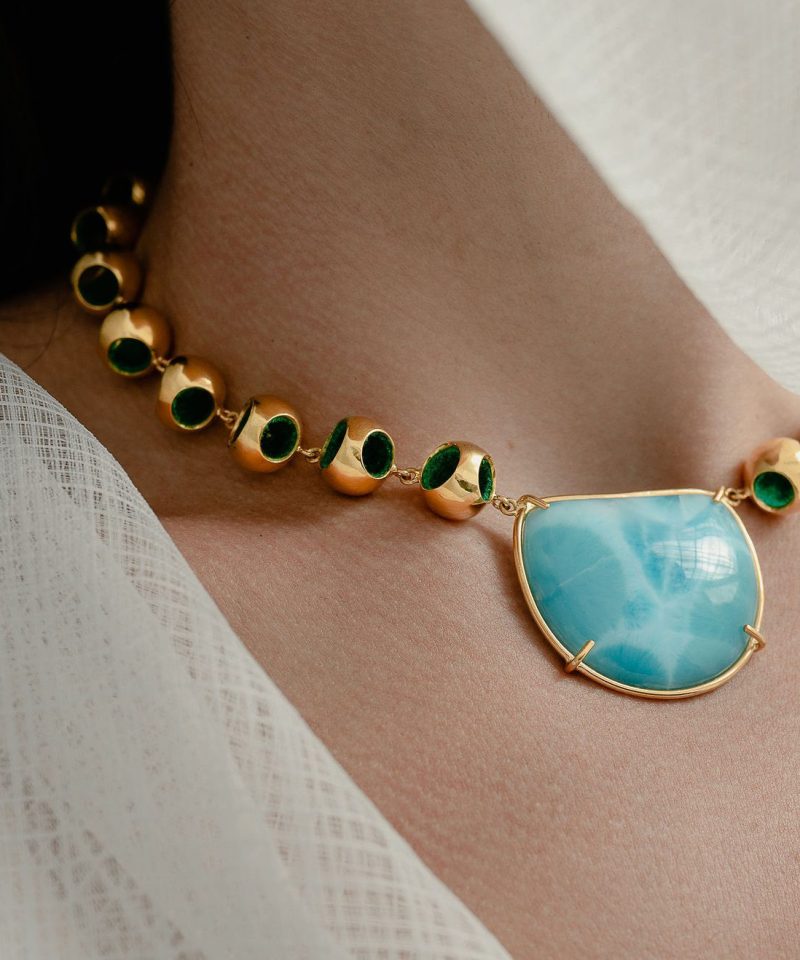
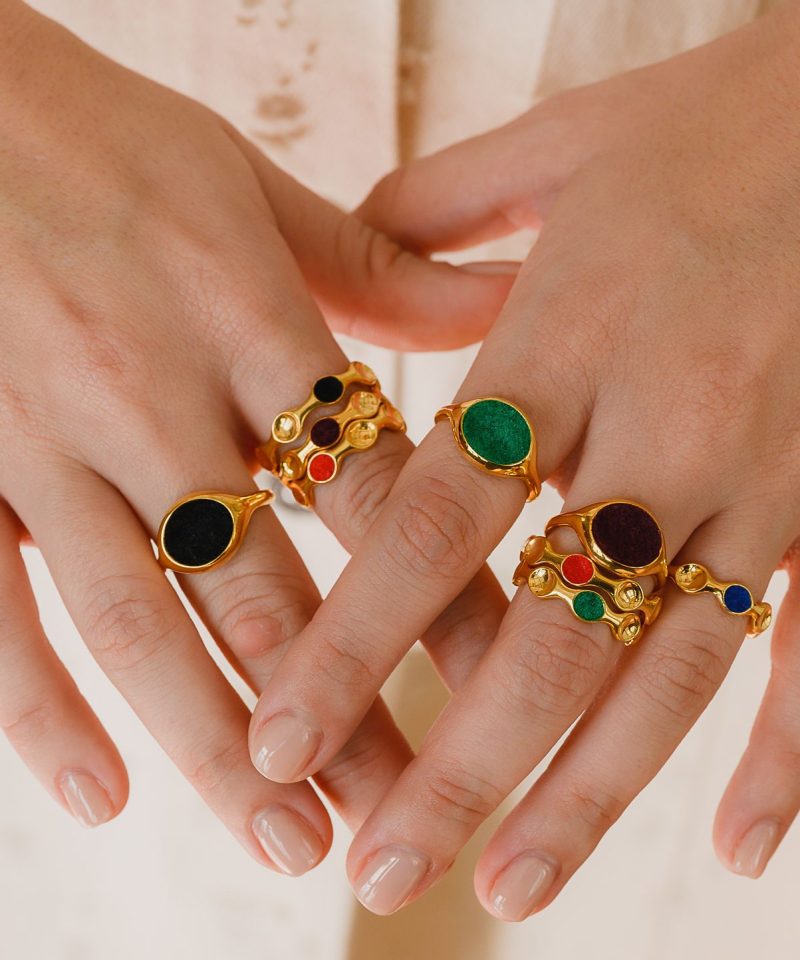
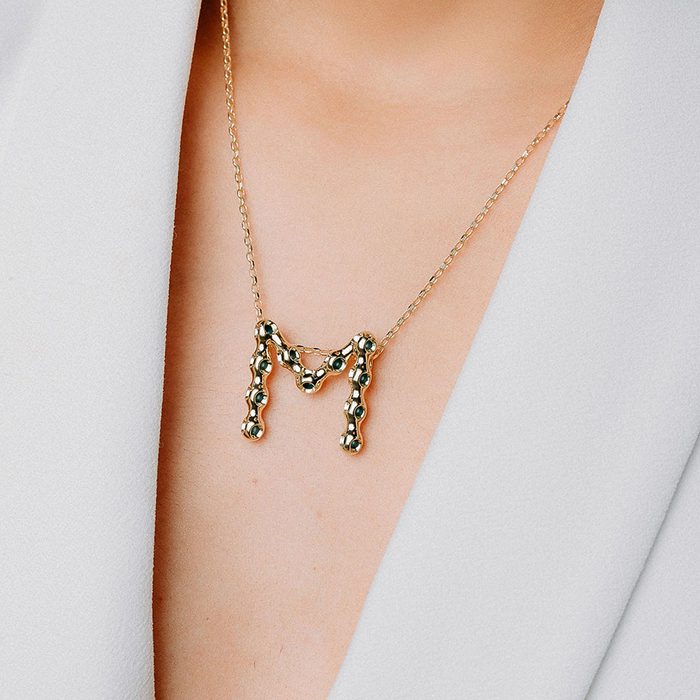
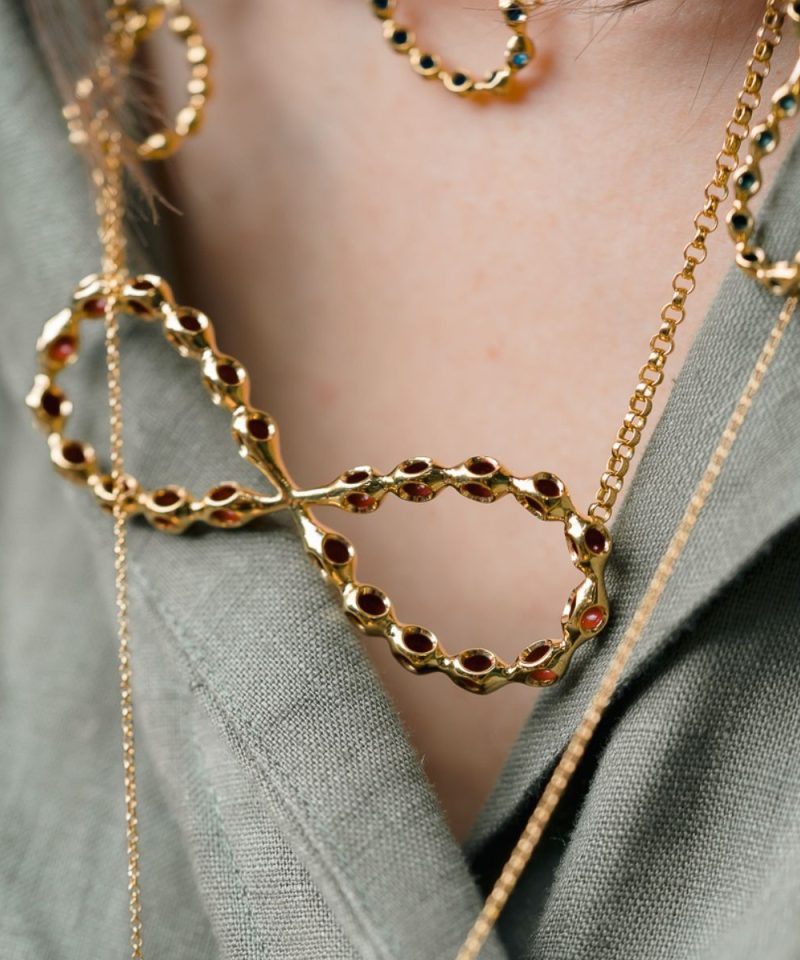
Many of these designs carry the Huritá, her signature hollow-sphere icon, which can hold one of five colors of microfiber at its center. With three stones, Huritá spheres in different sizes, and five interior colors, the collection becomes a language. The wearer does not simply choose a piece. They compose one.
For moonstone, this approach matters. A stone often wrapped in mystical clichés enters sculptural, contemporary forms instead, designed with the same rigor as any gem in the great houses. Its durability is not mistaken for plainness.
Elevating the Island’s Understated Treasure
Larimar arrives with a striking color. Amber arrives with millions of years of history. Moonstone arrives without either, and that is exactly why it needs a designer willing to look closely.
For Mónica Varela, elevating Dominican moonstone means selecting each piece for its individual tone and surface, and designing forms that let that character lead rather than compete with it. It means placing the stone beside Larimar and amber as an equal: three natural treasures of one island, expressed through one contemporary design language.
It also means trusting the wearer to notice what doesn’t announce itself. In a market full of louder gems, that’s its own kind of luxury.
A Stillness You Can Wear
Moonstone teaches a patient lesson. The most common material on Earth, formed under the right conditions and chosen by the right eye, becomes something people have treasured for millennia. Nothing was added. The character was always there, waiting to be recognized.
For Mónica Varela, bringing Dominican moonstone into contemporary jewelry continues the mission at the heart of her work as an artist: revealing the Dominican Republic through its own materials, and proving that its treasures belong in the same conversation as any on Earth.
Rivers spend centuries smoothing a stone into calm. Set against skin instead of metal, a piece of Dominican moonstone lets you borrow that patience directly, close enough to reach for on the days you need it.